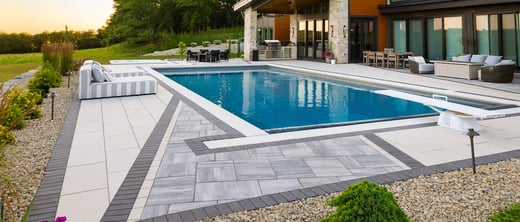
Paver Pattern Guide for Stunning Patios, Pools, Driveways, and Walkways
One of the reasons landscape designers love concrete pavers is because of the endless possibilities for eye-catching paver patterns. A single driveway, pool deck, or patio can have multiple patterns, with different paver layouts helping to define spaces for different purposes, such as outdoor dining or lounging. While aesthetics are the most important consideration when choosing a paver pattern, it’s also important to consider the structural integrity and complexity of each pattern and make sure your choices match the needs of your space.
This article will guide you through the most common paver layouts, offering practical tips to maximize both the beauty and durability of your installation while simplifying the process.
Standard Patterns
The most common paver configurations have standardized names used throughout the landscape industry. It’s helpful to know these terms when discussing your patio project with your contractor. Some of these patterns can be made with any size of paver, and some require the paver or the paver module to have a specific ratio between the length and width of the paver.
Stack Bond
A stack bond is a simple gridded layout made from uniformly sized pavers. With square pavers, a stack bond can be installed on a 45-degree angle for added visual interest.

Running Bond
A running bond is a layout where pavers of uniform width are arranged in offset rows. In a standard running bond, the pavers also have uniform lengths and the rows are offset by half of a paver-length, but other options are available, including a running quarter bond, where the rows are offset by a quarter of a paver-length. Grand XL DISCOVER® PAVERS are frequently installed in a running bond pattern.

Herringbone
A herringbone pattern requires uniformly sized pavers with a 1:2 ratio between their width and length, with the pavers laid at right angles to form offset diagonal v’s.
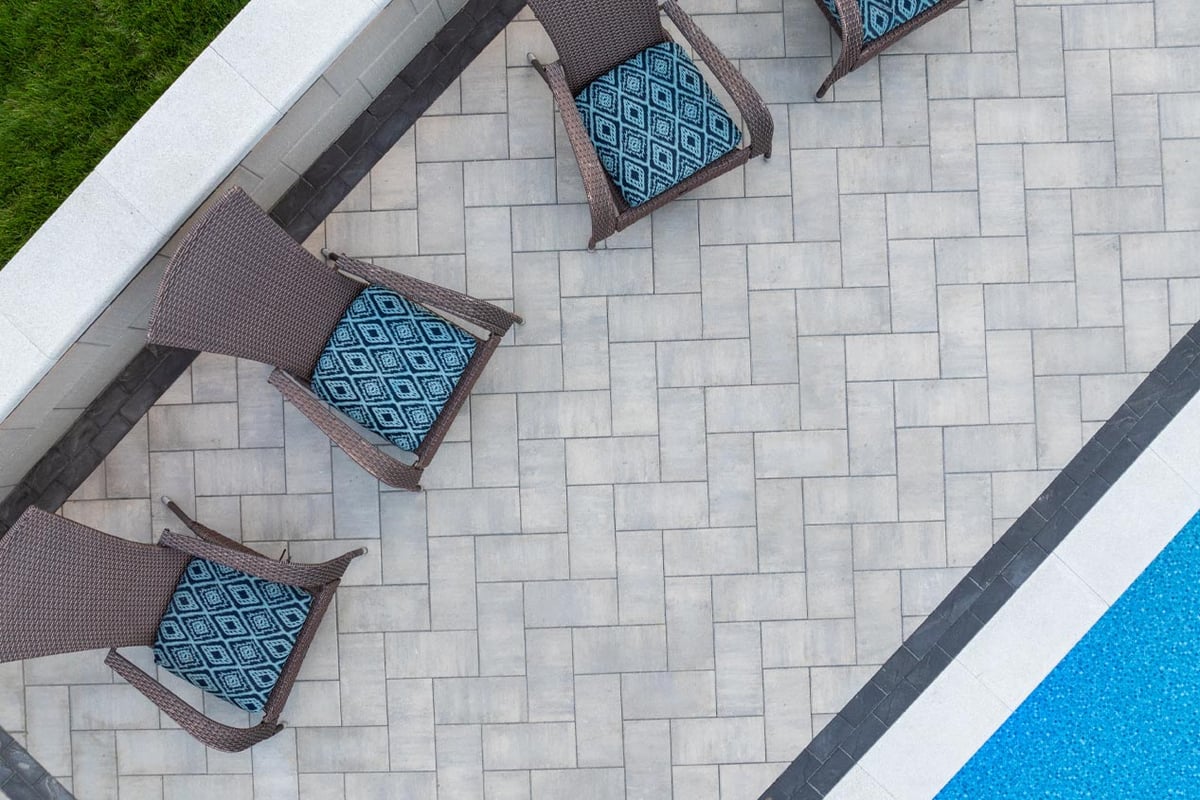
County Materials pavers that work with herringbone patterns include:
- VANTAGE PAVERS® 4x8
- ELEMENTS Paving Stones 4x8 or 8x16
- H2O PRO® Permeable Pavers
- REJUVENATE® Permeable Pavers
- Grand XL DISCOVER PAVERS
Three-Piece Pattern
There are many different patterns that work with pavers that are manufactured as a three-piece module. The patterns available depend on the dimensions of each paver in the module. County Materials has tailored the dimensions of our three-piece modular pavers to simplify installation and provide more design freedom by making the three pavers fit together into a square. We offer a Standard-scale three-piece paver option (4x8; 8x8; 8x12), as well as a Grand-scale three-piece paver option (8x16; 16x16; 16x24).
County Materials’ pavers that work with three-piece patterns are the following:
- DISCOVER PAVERS® and Grand DISCOVER PAVERS®
- Grand FUSION PAVERSTM
- Grand TRANQUILITY PAVERS®
- VANTAGE PAVERS and Grand VANTAGE PAVERS

Border Patterns
Borders not only offer structural support for your patio, but they also present a chance to enhance its visual appeal.
Some of the most popular border layouts include:
- Soldier Course: Long sides touching each other, with short sides forming the patio edge
- Sailor Course: Short sides touching each other, with long sides forming the patio edge
- Double Soldier or Double Sailor Course

You can also mix and match soldier and sailor courses in many different configurations. See more ideas in our full patio design guide.
Random Layouts & Nature-Inspired Patterns
County Materials’ dimensionally compatible pavers are designed to work well in precisely planned patterns as well as random layouts or ashlar patterns that use a variety of paver sizes to create a balanced appearance that mimics natural stone masonry.
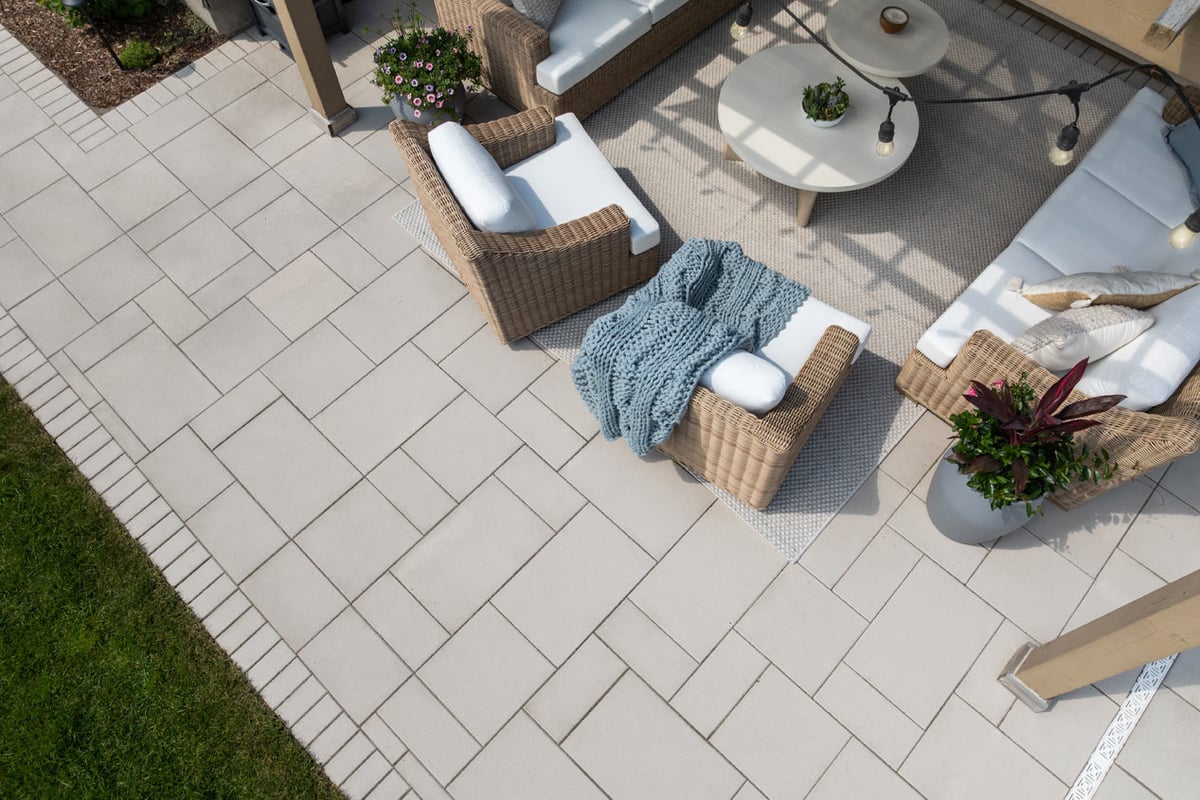
When planning to install pavers in a random layout, keep three things in mind:
- Avoid straight lines longer than four feet in either direction (or six feet if you’re using one of our Grand-scale three-piece modules). You shouldn’t be able to pick out defined columns or rows in your finished layout.
- Avoid four-corner junctions where the spaces between pavers form a plus sign. Four-corner junctions can become accidental focal points that break up the randomness of the pattern. Avoiding them also helps you avoid too much repetition of the same shape in too close proximity.
- Use all paver sizes at an equal rate to avoid ending up with an excess of pavers that are all the same size that require precise cuts to fit into your design. County Materials’ three-piece pavers are packaged to help prevent this problem by including a 1:1:1 ratio of all three sizes on each pallet.
We also offer pavers designed to mimic natural flagstone. DESTINATION PAVERS® are offered in nine sizes that fit together seamlessly to create an organic look that appears random.
Custom Patterns
Beyond the standard paver patterns, there are endless possibilities for varying the direction, size, and placement of pavers to achieve visual separation between spaces or to add depth to your design. Adding multiple colors can expand the possibilities even further.
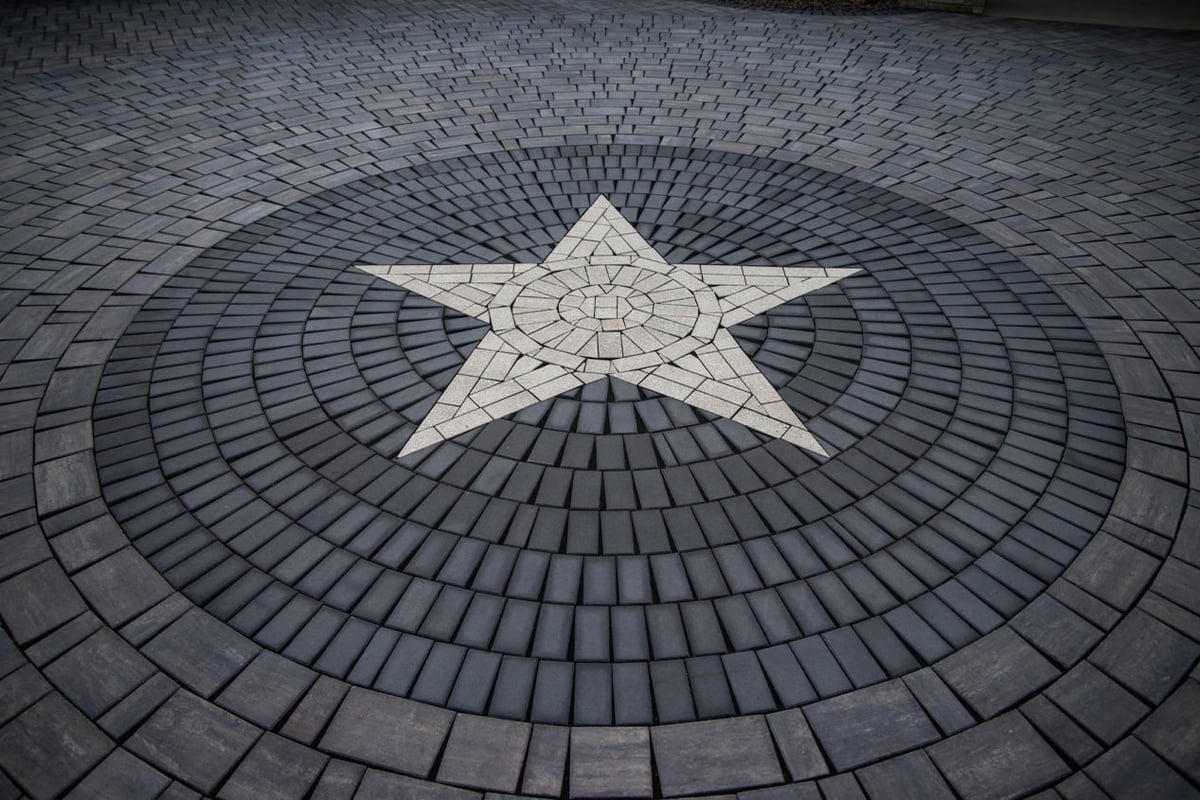
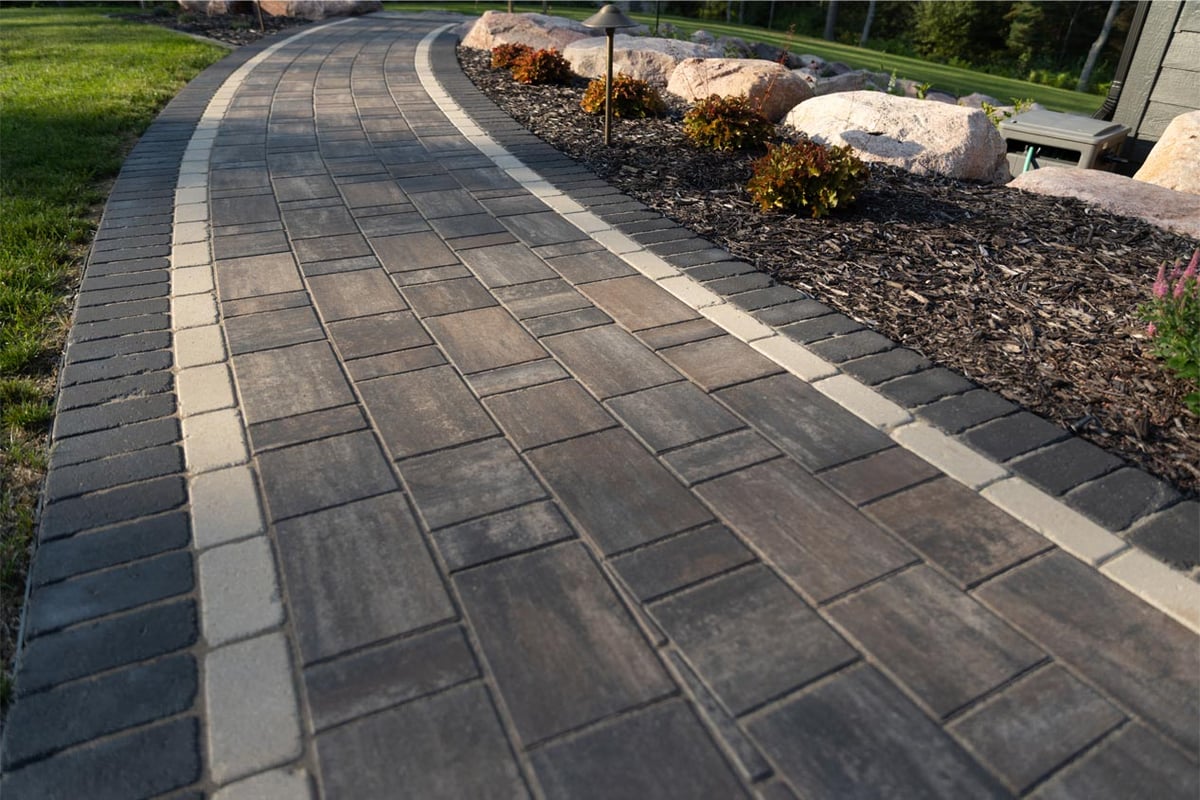
Some eye-catching options include custom inlays that define the edge of an intimate gathering area, a defined walkway through a patio, or intricate focal points like a paver compass design or a star.

Paver Pattern Considerations
When planning to build a paver patio, driveway, walkway, or pool deck, it’s important to decide what laying pattern you want before you purchase your pavers, since the laying pattern will determine the type and quantities of pavers you need. For example, if you like the look of a herringbone pattern, you will need pavers that are sold in single-size pallets with a 1:2 width-to-length ratio, but if you want to install a random pattern with a more varied look, you should purchase a paver that’s manufactured as a three-piece module.
Cutting pavers requires significant skill and attention to detail, so many customers look for patterns that can minimize cuts. With County Materials’ dimensionally compatible pavers, it’s possible to plan out a no-cut patio. Use the patio paver conversion chart on page 9 in our Landscape Spec Guide to plan a dimensionally compatible no-cut patio design.
Lastly, some paver patterns, such as herringbone, can be machine laid. For large-scale commercial projects, machine-laying can save significant installation time. If you plan to use a machine to install your pavers, make sure to choose pavers that have been noted as machine laying compatible in the Spec Guide.
Pick the Ideal Paver Pattern
Mixing and matching the direction, size, and type of pavers can add visual interest to your project. County Materials’ dimensionally compatible pavers with uniform heights make it easy to mix and match pavers to achieve stunning designs.
- Contact our Sales Team to discuss your project
- Request our Product Catalog for full color and size options
- Find a Contractor through our trusted partner network
- Find Where to Buy our concrete pavers